
Grants management software is the system a company uses to run its grantmaking end to end. One place to publish programs, collect and score applications, approve awards against a budget, pay the grantees, and keep a record of who decided what.
Uncommon Giving's grants management software handles the whole cycle in one place: AI-drafted application forms, nominations from your own employees, weighted reviewer scoring, budget-backed approvals, and biweekly payouts to vetted 501(c)(3) nonprofits.
From $2,400 a year, 0% of grant dollars taken as a fee, live in about two weeks.
Intake, review, approval, and payment in one product. No stitching together a workflow tool, a vetting service, and your AP department.
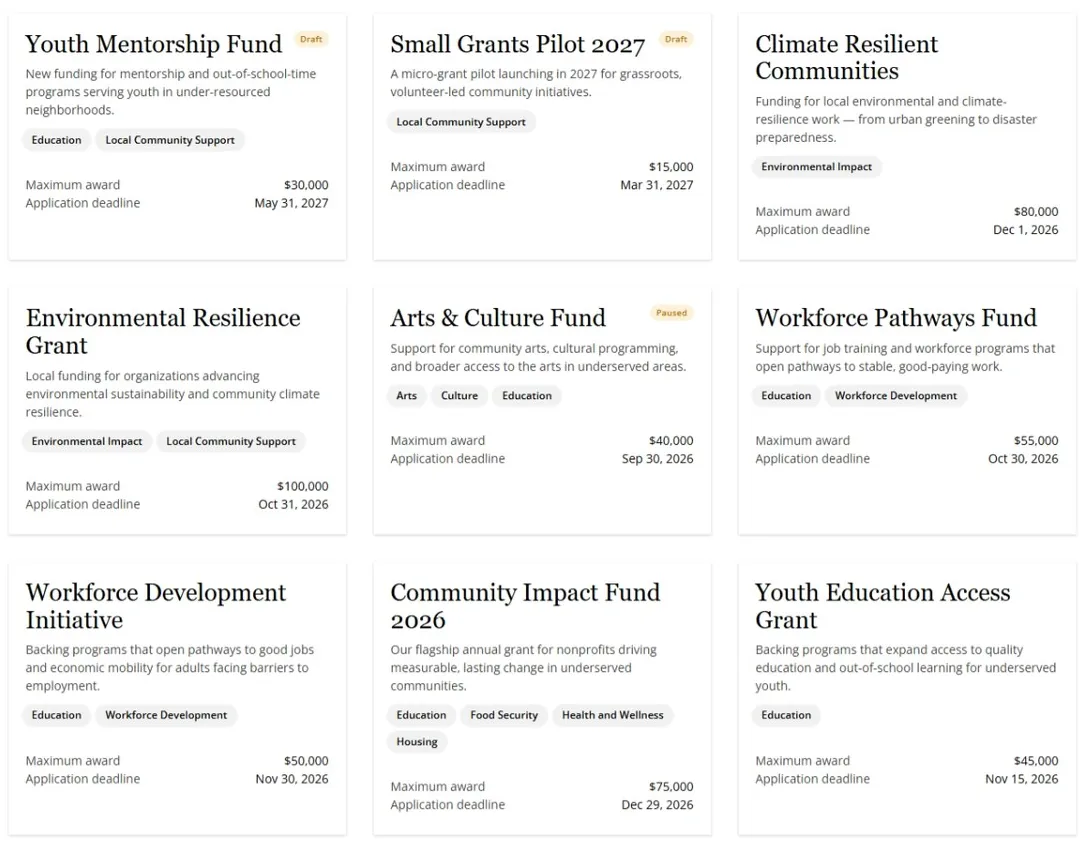
Run as many programs as you need side by side, each with its own maximum award, application window, cause categories, and form. A program can sit in draft, open, paused, or closed.
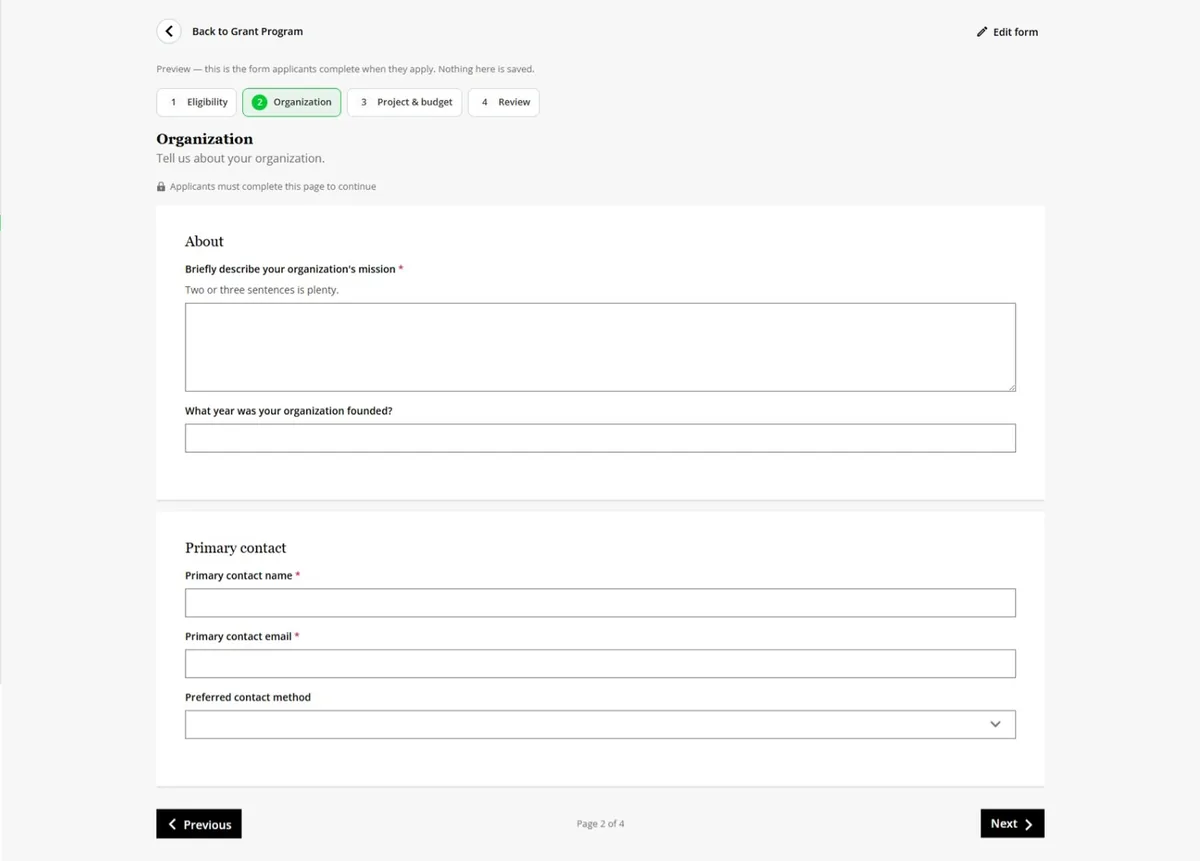
Describe the program in a sentence and Uncommon AI drafts a full multi-page application matched to your scoring rubric. Every question stays editable.
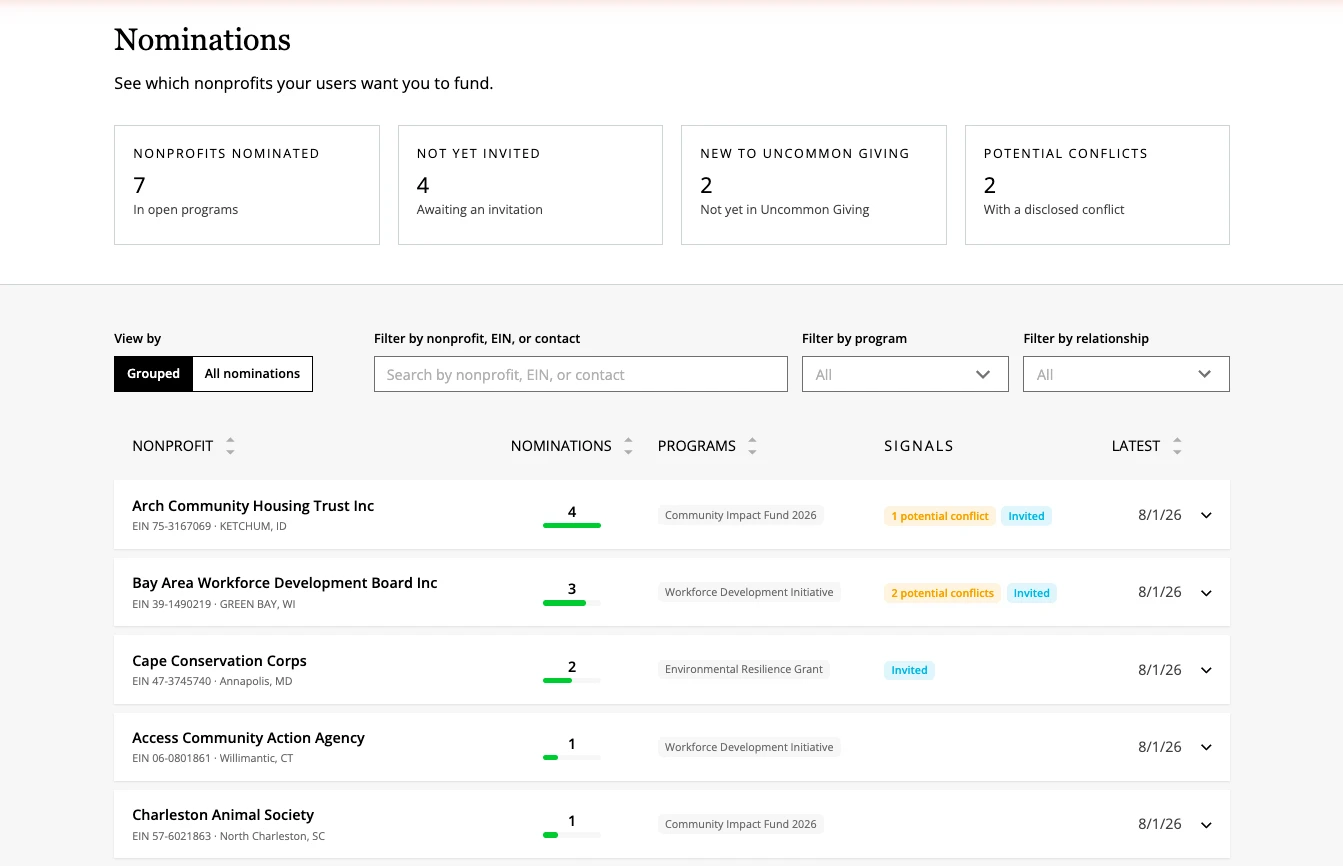
Employees nominate nonprofits they already give to or volunteer with. Nominations arrive grouped by organization, deduped by EIN, with conflicts of interest disclosed.
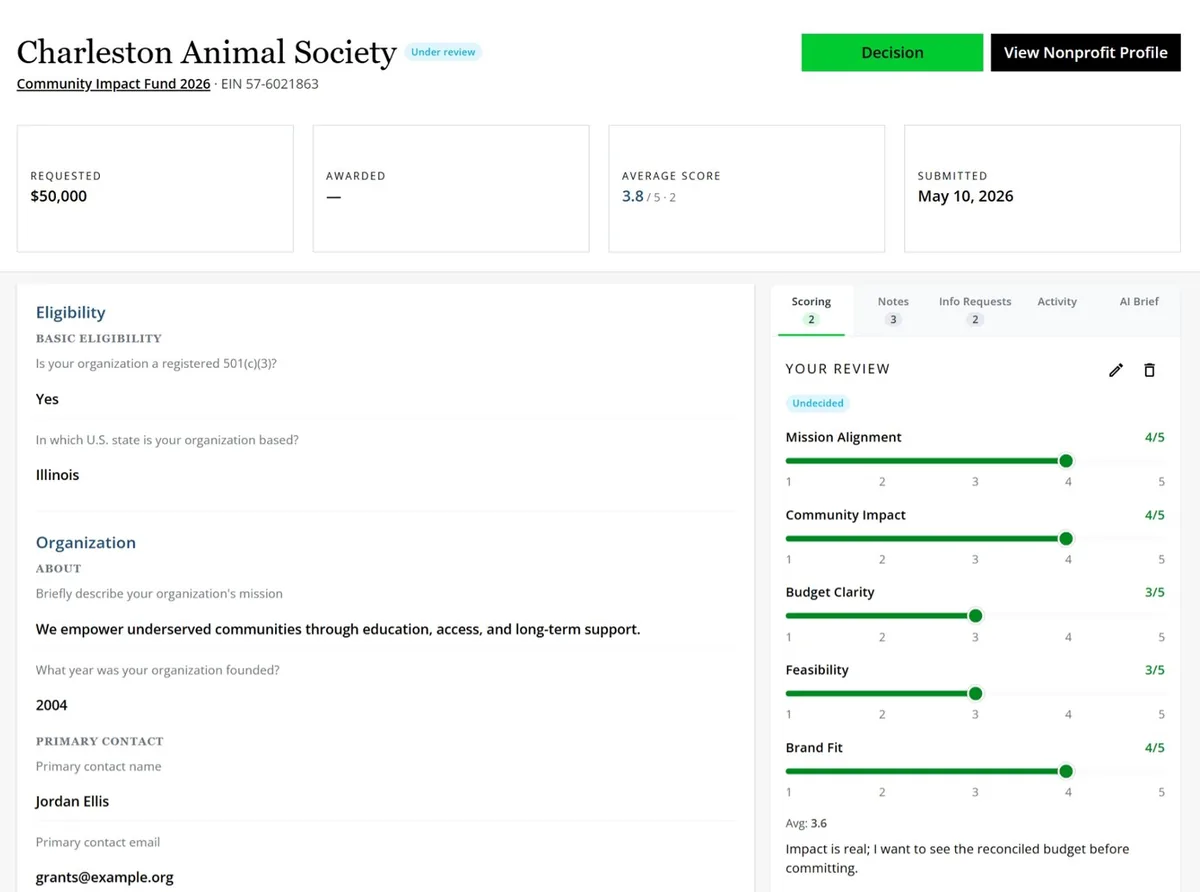
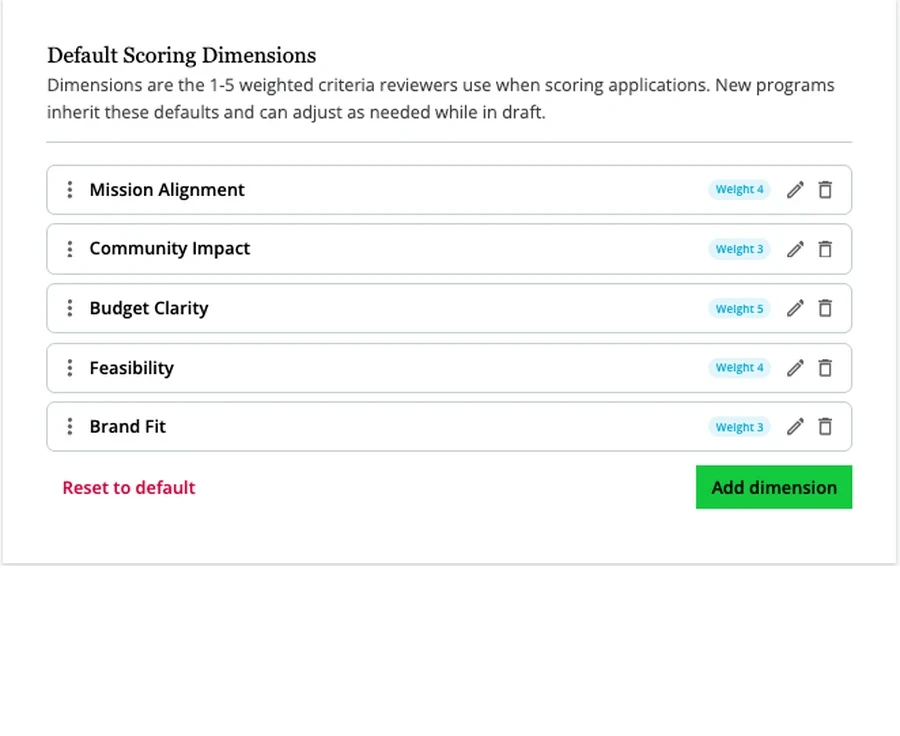
Score every application against weighted dimensions you define, on a 1 to 5 scale. The rubric locks when the program publishes, so each applicant is judged on the same criteria.
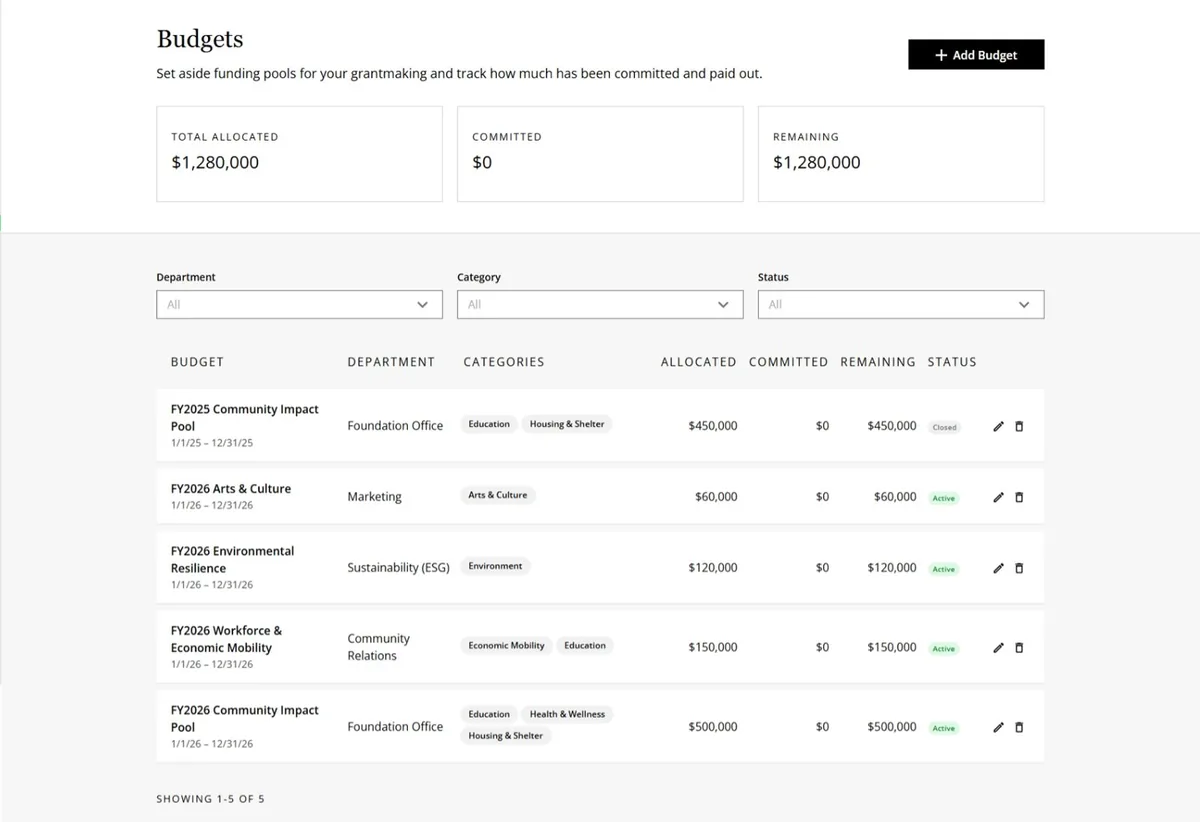
Set aside funding pools by department, fiscal year, and cause category. Every award draws against one of them. Allocated, committed, and remaining stay current without anyone updating a sheet.
Every grantee is a verified, continuously monitored IRS-registered 501(c)(3). Approved grants pay out on a biweekly cycle, using the same rails as your employee giving program.
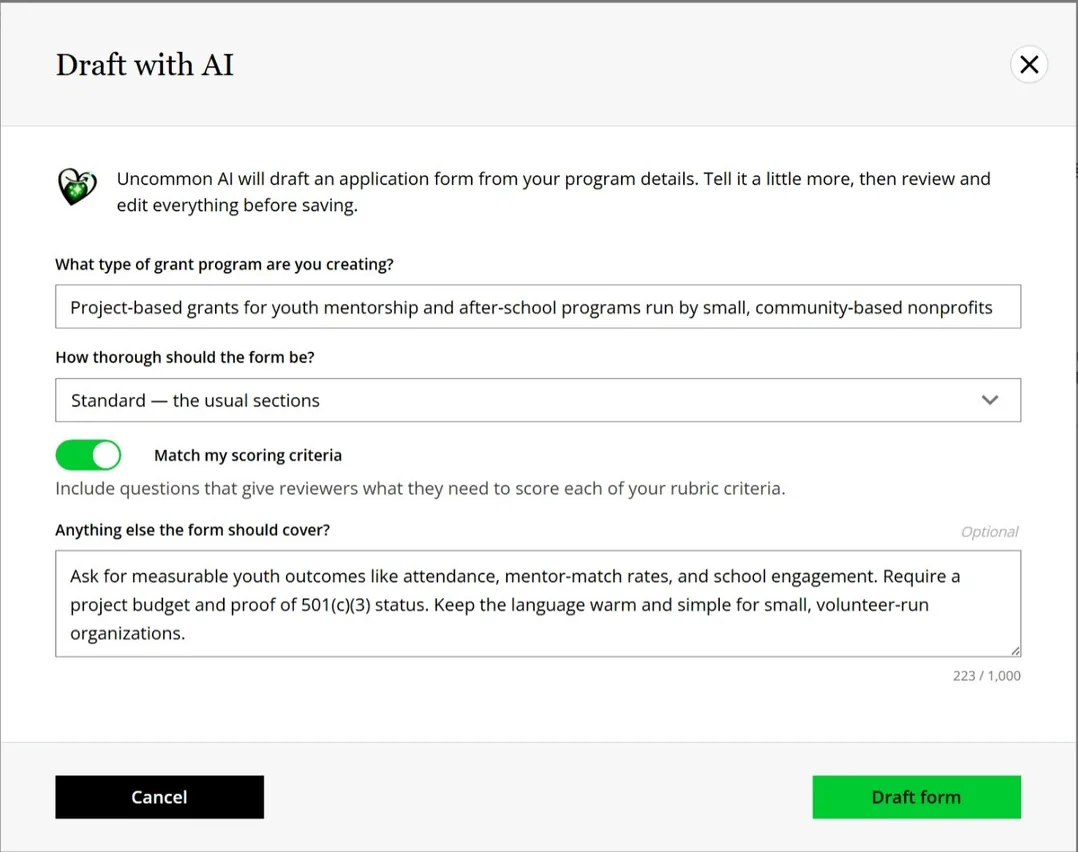
Five steps, in order, with the state of each one visible. Nothing publishes until the program is actually ready, and you can go back to any step later.
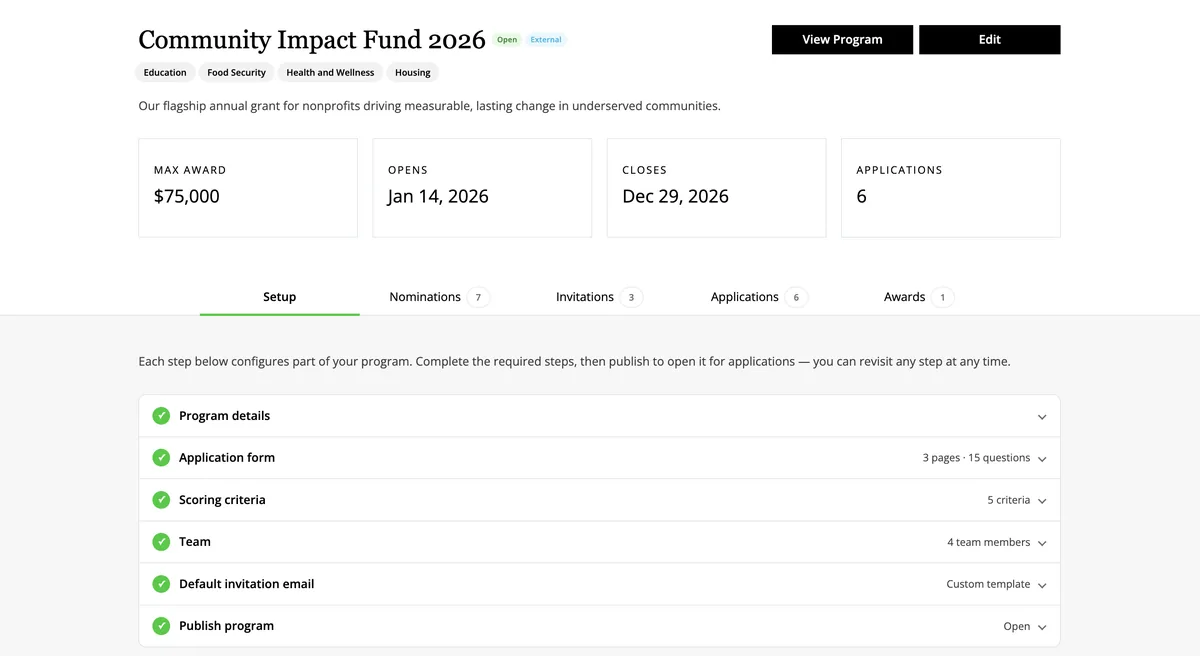
Writing a grant application from scratch is the step that stalls programs for weeks. Describe what you're funding and Uncommon AI produces a complete draft. From there you edit it like any other form.
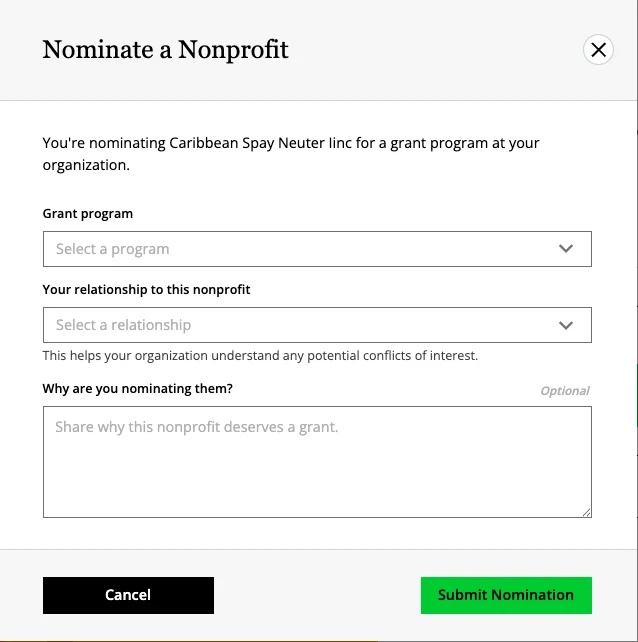
Your people already know which nonprofits are doing the work. They give to them and volunteer with them in the same platform. Nominations turn that into a funding pipeline instead of a suggestion box.
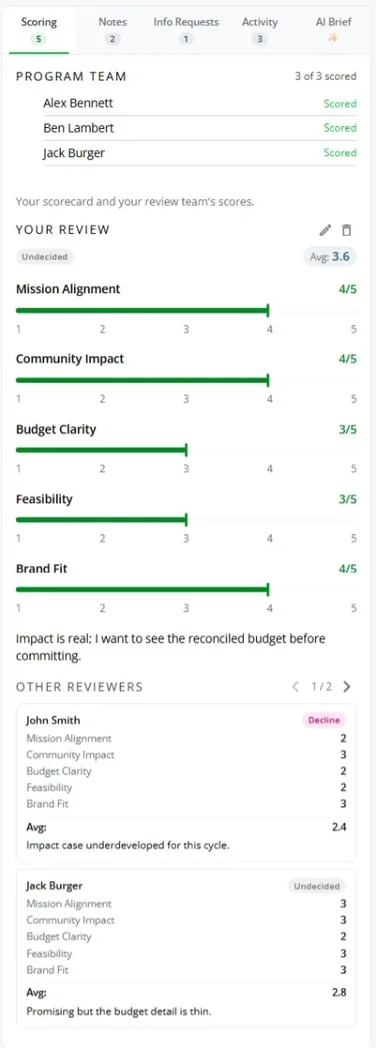
The application on the left, your scorecard on the right. No exporting to a spreadsheet, no chasing reviewers over email, no version of the rubric that only one person has.
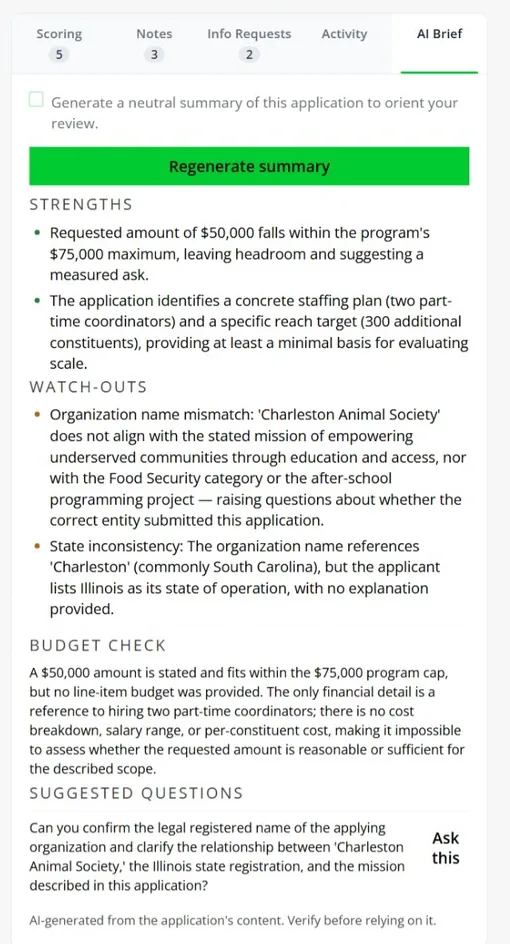
A neutral read of the application before you read it yourself. Reviewers start oriented instead of cold, and nobody misses the thing buried on page four.
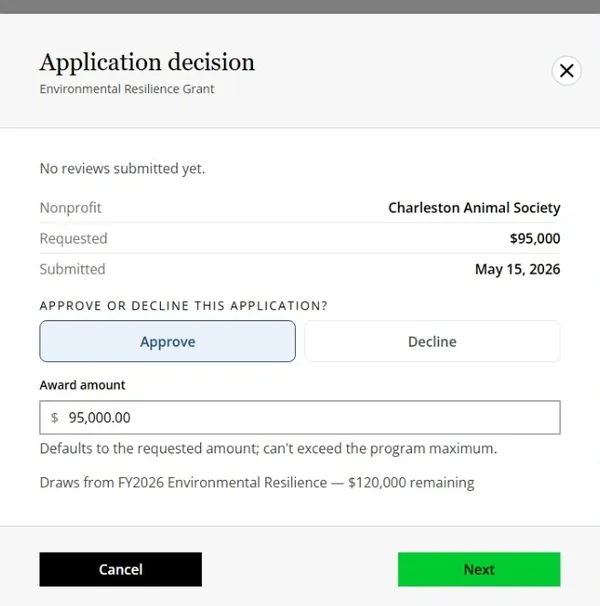
Grant budgets usually live in a spreadsheet that's a week behind the decisions. Here the pool is part of the approval, so you can't over-commit even if you try.
Add the details, build or AI-draft the application form, define your weighted scoring rubric, and set the invitation email. Publish when the checklist is green.
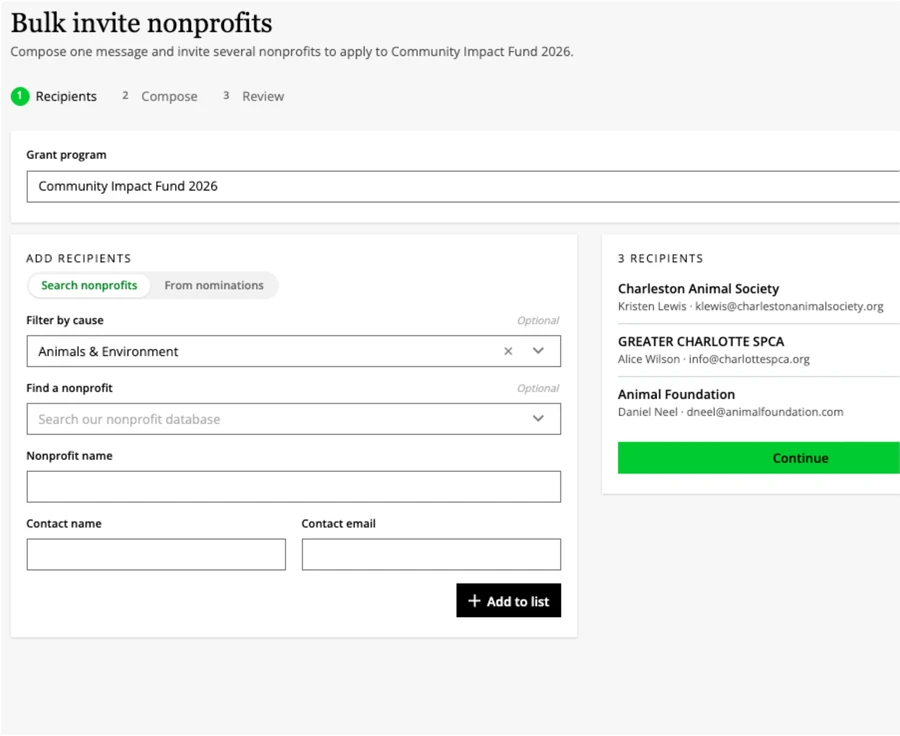
Invite nonprofits in bulk, open the program publicly at your own URL, or pull from the organizations your employees have already nominated.
Your review team scores against the shared rubric. Approve against a budget, and the grant goes out on the next biweekly disbursement to an already-vetted nonprofit.
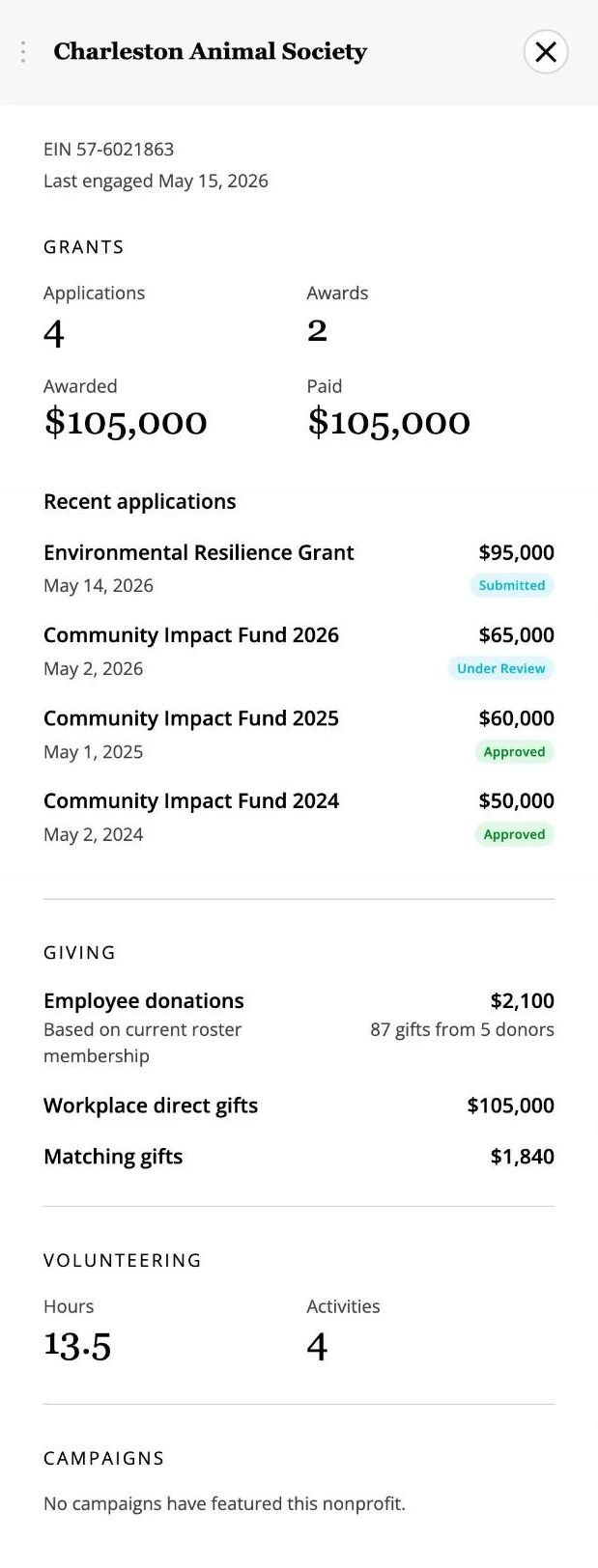
Most companies run corporate grants in one system and employee giving and matching in another, so nobody can answer a simple question: what is our total relationship with this organization? Because grants run on the same platform, every nonprofit has one record.
Grants at Uncommon Giving run on the same disbursement and vetting infrastructure that already moves employee donations and matching gifts. That's why approved grants pay out biweekly instead of on a monthly batch cycle.
Enterprise CSR suites typically pool grant payments and release them on a roughly 30-day cycle. Workflow-only grant tools don't move money at all, so the grants manager is still cutting the checks and running their own 501(c)(3) checks.
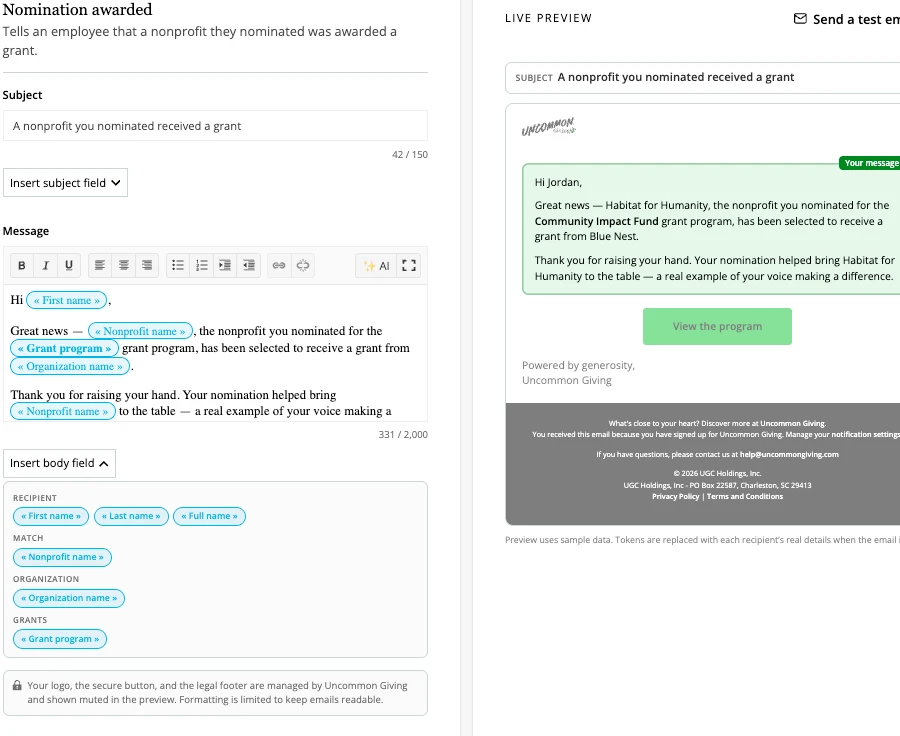
Invitations, communications, scoring configuration, and reviewer coordination. All of it is built in, and you can change any of it yourself without opening a support ticket.
Grants management software is the system a company or foundation uses to run its grantmaking end to end: publishing grant programs, collecting applications, scoring them against a rubric, approving awards against a budget, paying grantees, and keeping an audit trail of every decision. Uncommon Giving's platform covers all of that, including nonprofit vetting and the actual movement of the money. Most grant tools leave those last two to the customer.
Workflow-only grant tools handle intake and review, then hand the hardest part back to you: verifying that the applicant is a nonprofit in good standing, cutting the check, and reconciling it. Uncommon Giving includes 501(c)(3) verification and disbursement in the base product. Approved grants are paid from the platform to a nonprofit that has already been vetted, so the grants manager isn't also running compliance checks and accounts payable.
Most companies are live in about two weeks. There's no professional-services engagement and no implementation fee. An admin works through the setup checklist (details, application form, scoring rubric, invitation email) and publishes when it's ready. If you're moving off another system, open cycles and grantee records come across as part of onboarding.
Approved grants are disbursed on a biweekly cycle. That's because grants run on the same disbursement rails Uncommon Giving already uses for employee donations and matching gifts, rather than a separate monthly batch process. Enterprise CSR suites typically pool grant payments and release them roughly every 30 days.
We do. Every organization in Uncommon Giving's database of 1.8M+ nonprofits is a verified IRS-registered 501(c)(3), continuously monitored for good standing. When an employee nominates an organization that isn't in the database yet, it's flagged so it can be onboarded and verified before an invitation goes out.
Yes, and it works differently here than in a standalone grants tool. Because your employees already give and volunteer in Uncommon Giving, they can nominate an organization straight from their own account or from a nonprofit's profile. Admins see nominations grouped by organization and deduped by EIN, with each nominator's stated relationship to the nonprofit captured up front so potential conflicts of interest surface before a decision, not after. Nominations convert directly into bulk invitations to apply.
Yes. You define the weighted scoring dimensions for each program on a 1 to 5 scale: mission alignment, community impact, budget clarity, feasibility, or whatever fits your criteria. The rubric locks when the program publishes, so every applicant is judged consistently. You assign a program team of reviewers, see who has and hasn't scored, and each reviewer sees the others' scores and recommendations before the decision.
Yes. That's the point. Grants, employee giving and matching, volunteering, and campaigns share one platform and one nonprofit record. For any organization you can see grant applications and awards next to employee donations, matching gifts, volunteer hours, and campaign participation, and report on total community investment as a single number instead of reconciling four systems.
It's a strong fit. Banks and credit unions with Community Reinvestment Act obligations need a recurring, documented grants program: consistent scoring criteria, a record of who reviewed what, budgets tied to fiscal periods, and proof that funds reached verified nonprofits. Uncommon Giving captures all of that as a by-product of running the cycle, so the documentation is a report rather than a reconstruction project.
Uncommon Giving grants management starts at $2,400 a year with implementation from $0, and 0% of grant dollars disbursed is taken as a fee. Pricing scales with the size of your grants program rather than your headcount. Talk to our team for a written cost comparison against what you're spending today.
See how Uncommon Giving handles intake, scoring, budgets, and payouts, and what it would replace in your current stack. Comparing grant tools? See our guides to Submittable alternatives and grant management for corporate giving teams, or our Uncommon Giving vs Bonterra comparison.
This will close in 0 seconds